Powered By Blogger

Touristic Sites In Jordan

Amman is the capital of the Hashemite Kingdom Of Jordan Near Amman (AlSalt,Wadi Seer) 1-- North and West of Amman(Jerash,‘Ajloun,Irbid,Umm Qais,Hemma,Umm al-Jimal) The Jordan Valley(The River Jordan,The Dead Sea,Deir Ain Abata Deir ‘Alla,Tabaqat Fahl) 2-- East of Amman: The Desert Castle Loop(Qasr al-Hallabat,Azraq Oasis,Qasr al-Azraq,Shomari Wildlife Reserve ,Qusayr ‘Amra,Qasr al-Harraneh,Qasr al-Mushatta Qastal) 3-- South of Amman(The King’sHighway,Madaba,MountNebo, Mkawer,Hammamat Ma’een,Karak,Khirbet al-Tannur,Tafileh ,Shobak,Dana Nature Reserve Wadi Rum) 4-- Petra 5-- Aqaba 6-- The Ancient Holy Land 7-- Islamic Holy Sites in Jordan
Showing posts with label Dead Sea. Show all posts

Wednesday, January 30, 2013

"The cure for anything is Dead Sea


"The cure for anything is salt water: sweat, tears or the sea."- Isaki Dinesen

Thursday, March 1, 2012

Geography


 The Jordan Valley
The Jordan Valley, which extends down the entire western flank of Jordan, is the country’s most distinctive natural feature. The Jordan Valley forms part of the Great Rift Valley of Africa, which extends down from southern Turkey through Lebanon and Syria to the salty depression of the Dead Sea, where it continues south through Aqaba and the Red Sea to eastern Africa. This fissure was created 20 million years ago by shifting tectonic plates.


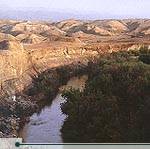
The northern segment of the Jordan Valley, known in Arabic as theGhor, is the nation’s most fertile region. It contains the Jordan River and extends from the northern border down to the Dead Sea. TheJordan River rises from several sources, mainly the Anti-Lebanon Mountains in Syria, and flows down into Lake Tiberias (the Sea of Galilee), 212 meters below sea level. It then drains into the Dead Sea which, at 407 meters below sea level, is the lowest point on earth. The river is between 20 and 30 meters wide near its endpoint. Its flow has been much reduced and its salinity increased because significant amounts have been diverted for irrigational uses. Several degrees warmer than the rest of the country, its year-round agricultural climate, fertile soils, higher winter rainfall and extensive summer irrigation have made the Ghor the food bowl of Jordan.

The Jordan River ends at the Dead Sea, which, at a level of over 407 meters below sea level, is the lowest place on the earth’s surface. It is landlocked and fed by the Jordan River and run-off from side wadis. With no outlet to the sea, intense evaporation concentrates its mineral salts and produces a hypersaline solution. The sea is saturated with salt and minerals–its salt content is about eight times higher than that of the world’s ocean–and earns its name by virtue of the fact that it supports no indigenous plant or animal life. The Dead Sea and the neighboring Zarqa Ma’een hot springs are famous for their therapeutic mineral waters, drawing visitors from all over the world.
 
Wadi Araba. © Zohrab
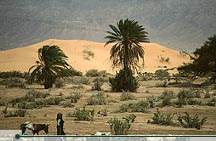
South of the Dead Sea, the Jordan Valley runs on through hot, dry Wadi ‘Araba. This spectacular valley is 155 kilometers long and is known for the sheer, barren sides of its mountains. Its primary economic contribution is through potash mining. Wadi ‘Araba rises from 300 meters below sea level at its northern end to 355 meters above sea level at Jabal Risha, and then drops down again to sea level at Aqaba.

The seaside city of Aqaba is Jordan’s only outlet to the sea. Its 40 kilometer-long coastline houses not only a tourist resort and Jordan’s only port, but also some of the finest coral reefs in the world. The rich marine life of these reefs provides excellent opportunities for snorkeling and diving.


Wednesday, February 29, 2012

Rise of the City States

Late Bronze Age
 
Clay tablets; Late Bronze Age. © Ministry of Tourism & Antiquities

The Late Bronze Age was brought to a mysterious end around 1200 BCE, with the collapse of many of the Near Eastern and Mediterranean kingdoms. The main cities of Mycenaean Greece and Cyprus, of the Hittites in Anatolia, and of Late Bronze Age Syria, Palestine and Jordan were destroyed. It is thought that this destruction was wrought by the "Sea Peoples" marauders from the Aegean and Anatolia who were eventually defeated by the Egyptian pharoahs Merenptah and Rameses III. One group of Sea Peoples were the Philistines, who settled on the southern coast of Palestine and gave the area its name.

The Israelites may have been another cause of the Late Bronze Age devastation in Palestine. Although the archeological record does not always agree with the Biblical narrative, it is certain that the Israelites destroyed many Canaanite towns including Ariha (Jericho), Ai and Hazor.

One of the issues debated concerns the Kingdom of Edom (the area of Jordan south of the Dead Sea). The Book of Numbers states that the Israelites coming from Egypt found Edom a fully developed state. However, no Edomite settlements have been identified before the end of the 8th century BCE, and there was surely no "state" of Edom as early as 1200 BCE, when the Biblical conquest narrative is set. Some archaeologists believe that the "king" of Edom was a Bedouin sheikh, and that his "kingdom" would have left no noticeable ruins for archaeologists to find.

Monday, February 27, 2012

Hammamat Ma’een

South of Amman


The hot springs and baths of Hammamat Ma’een have been enjoyed for therapeutic and leisure pursuits for thousands of years. The public springs and commercial resort area are located 35 kilometers southwest of Madaba, along a winding road which crosses some of the most spectacular territory around the Dead Sea. It is, however, impossible to drive directly from Hammamat Ma’een to the Dead Sea. Hammamat Ma’een should not be confused with the actual town of Ma’een, which is 15 kilometers before the springs.

The main public attraction is a large spring-fed waterfall, while a number of smaller ones spurt forth within the private resort area (08-545-500). Shower facilities and a swimming pool are also available for public use. Within the spa complex, one of the most popular attractions is the body mud pack treatment, followed by showering and a hot bath. Other spa and health facilities are also available in Hammamat Ma’een, as are accommodations. The hot springs are open from 08:00 until midnight daily. 

Saturday, February 25, 2012

The Dead Sea


The Dead Sea is 75 kilometers long and from 6 to 16 kilometers wide. It is fed by the Jordan River, but it has no outlet. As its name suggests, the Dead Sea is entirely devoid of plant and animal life. This is due to an extremely high content of salt and other minerals—350 grams of salt per kilogram of water, as compared to about 40 grams in the world’s oceans

.
The Dead Sea. © Zohrab

This concentration is caused by a rapid rate of evaporation. These natural elements give the waters of the Dead Sea certain curative properties, recognized since the days of Herod the Great over 2000 years ago.

Also famous for their restorative powers are the thermal mineral springs of nearby Zarqa Ma’een, which hosts a therapeutic health spa.

The Dead Sea is also famous geographically as "the lowest point on earth," lying some 400 meters below sea level. In addition to the historical significance of the "Salt Sea," as it was referred to in the Bible, the Dead Sea is today an important and rich source of minerals essential for agricultural and industrial development, as well as for the treatment of various medical conditions such as psoriasis. Visitors to the Dead Sea come away with an unforgettable swimming experience, as the high density of the water makes sinking virtually impossible. Indeed, swimming is also difficult, as one is lifted too high in the water to be able to stroke properly. More appropriate is the often-photographed pose showing a visitor reclining in the water, leisurely reading a perfectly dry newspaper.

While marine enthusiasts will find a paradise in Aqaba, the Dead Sea is a great place to catch up on your reading!

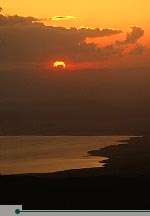
The Dead Sea at sunset. © Zohrab

At the southern end of the sea, the Arab Potash Company has built vast evaporation ponds covering over 10,000 hectares to extract potash from the mineral-rich waters. The project has allowed Jordan to become one of the world’s leading potash exporters.

The main resort area is located on the northern shores of the Dead Sea at Sweimeh, about 45 kilometers southwest of Amman. In Sweimeh, the Government Rest House provides showers and changing facilities, a restaurant, and a choice stretch of beach. The only accommodations currently available are at the Dead Sea Spa Hotel, a few kilometers past Sweimeh. There, you can enjoy a variety of mineral treatments at the German medical center: as well as the waters of the Dead Sea, other therapies include black mud, highly oxygenous air treatment, filtered sunrays, massage and gymnastics. Private bungalows are also available. Work is progressing toward the completion of additional resort hotels along the Dead Sea.

In addition to being an attraction for leisure and medicinal tourism, the Dead Sea was the location for a number of significant biblical events. The Bible refers to it as the Sea of the Araba, the Salt Sea, and the Eastern Sea (Deuteronomy 3: 17; Joshua 3: 16; Numbers 34: 12; Ezekiel 47: 18). The Arabah desert, or "wilderness", of the Bible is the arid basin between the Dead Sea and the Gulf of Aqaba today known as Wadi Araba.

Of particular importance is the wide plain along Jordan’s southeast Dead Sea coast known today as the Southern Ghor. Known in the Bible as the Valley of Salt—undoubtedly because of the natural salt formations which form along the water’s edge—it is where David "slew 18,000 Edomites" (2 Samuel 7:29). This wide plain is also where Abraham and Lot divided their herds and people, going their separate ways after the journey from Egypt. While Abraham journeyed into Canaan, "Lot chose for himself the whole plain of the Jordan and set out toward the east" (Genesis 13: 11).


Lot's wife stone, the Dead Sea.
© Jad Al-Younis, Discovery Eco-Tourism


The Bible then says that "Lot lived among the cities of the plain and pitched his tents near Sodom" (Genesis 13: 12). The Southern Ghor may thus be associated with one of the most dramatic stories in the Bible, that of Sodom and Gomorrah. While conclusive proof has not yet been found, some scholars see Bab al-Dhra’ and Numeira as good candidates for the biblical Sodom and Gomorrah, destroyed by God because of their wickedness (Genesis 19). The other biblical "cities of the plain—"Admah, Zeboiim and Bela (or Zoar)—may still be waiting to be rediscovered under the ruins of Early Bronze Age towns as Feifa, Safi, Khneizirah, and other places throughout the biblical Valley of Salt.

Saturday, February 11, 2012

6th century Madaba Map – dead sea


Medical Tourism


Jordan is one of the country, which is mixed with the treatment of diseases of the body with recreation. Thanks to the great blessing bestowed by Allaah on the Jordanian territory where there are all elements of physical therapy from the waters of warm rich in salt, to the mud volcano, to the mild weather and natural beauty, making it the spa resort frequented by many of the asylum treatment of various diseases, and most important of these resorts Therapeutic Dead Sea: As mentioned, its importance, but is worth mentioning that the German insurance companies do not send patients for treatment outside of Germany only to the eastern shores of the Dead Sea exclusively for the treatment of skin diseases.

Ma'in: Ma'in located at a distance of 58 km south of Amman, and reduced the area 120 meters above sea level, and is famous spas and natural clinics that provide treatment for people with diseases of the circulatory Algeldahoamrad, and the pain of bones and joints, back and muscles.

Hamma area of Jordan is located Hamma, 100 km north of Amman, one of the most important sites of treatment and tourism in the region, has been established resort provides all tourist services and treatment.

Afra Falls: Located 26 kilometers from the city of Tafileh in southern Jordan, where water from more than 15 springs, and features water of these springs Bhrartha and contain the minerals, in addition to these resorts therapeutic natural Jordan possesses a network with advanced medical belonging to both the public and private sectors. The advantage of medical services which the novelty of hospitals and medical centers, and a number of skilled specialists in the world in the treatment of various diseases.